Core plug aeration & why your lawn needs it.
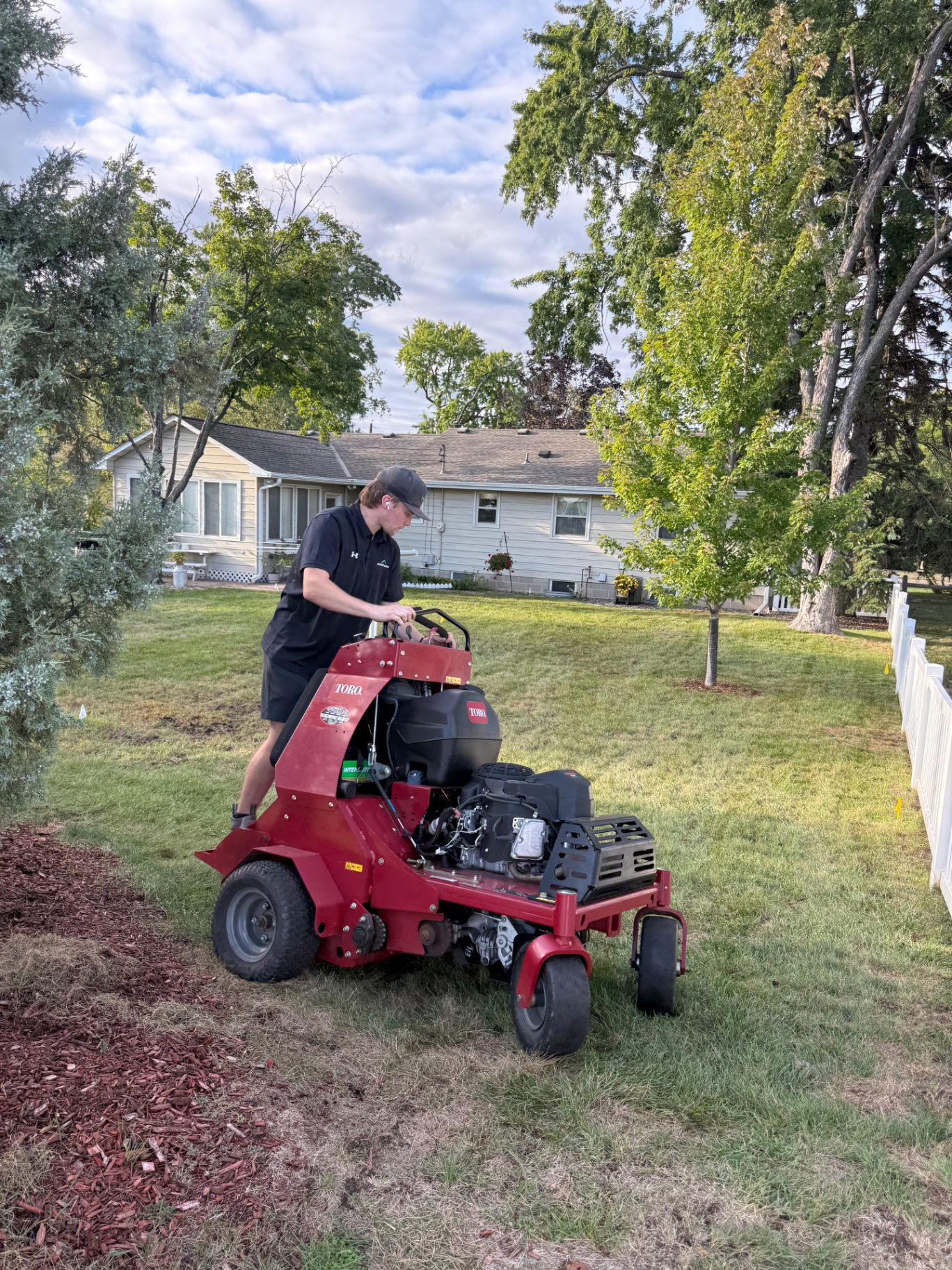
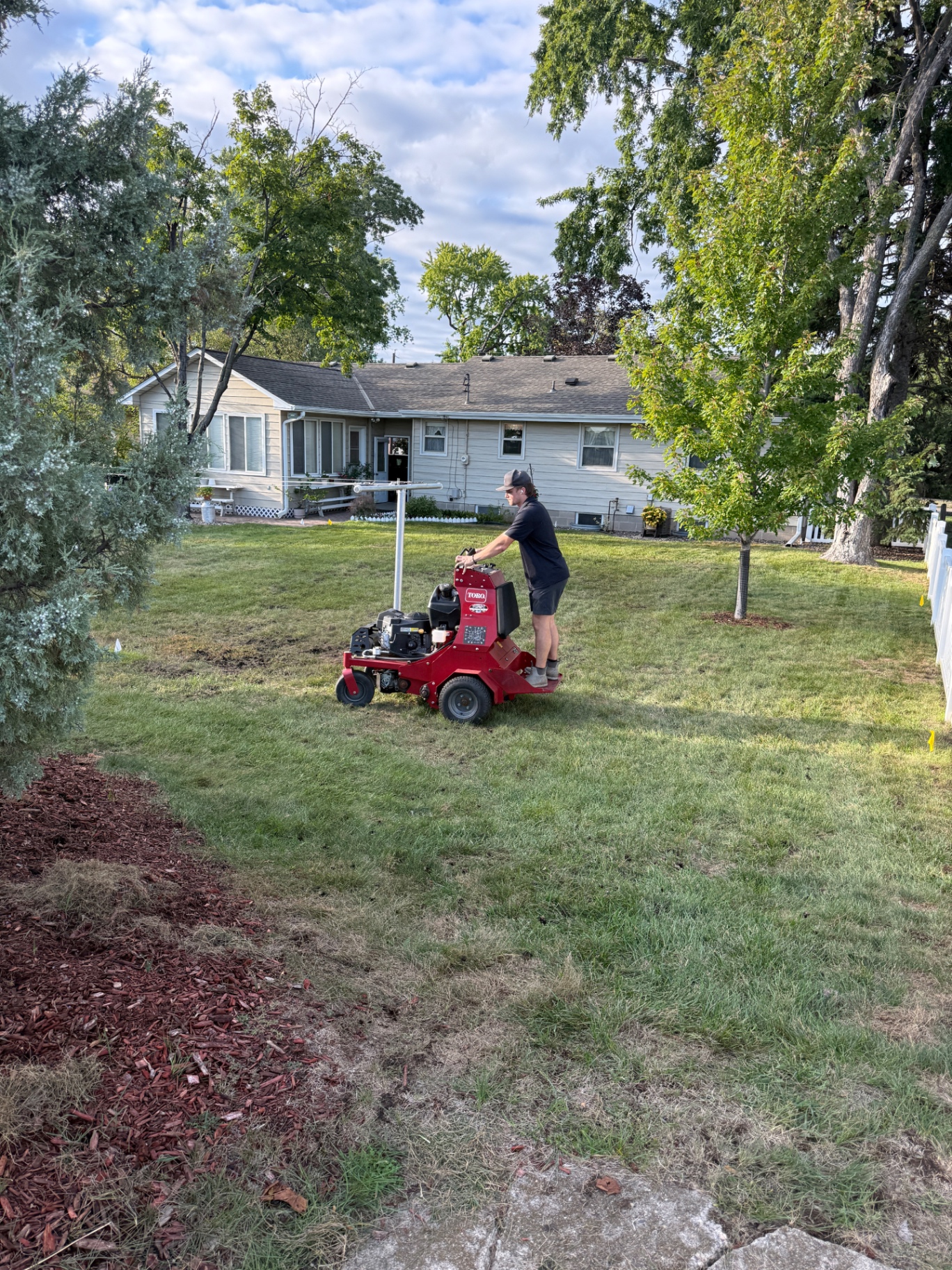
We pull thousands of small soil plugs out of your lawn so air, water, and nutrients get down to the roots. It's the single best thing you can do for a compacted, thin, or tired Minnesota lawn.
Under the surface
Before and after aeration.
Compacted soil
- — Thick thatch layer blocks air and light
- — Water runs off instead of soaking in
- — Short, shallow roots that dry out fast
Aerated soil
- — Plug holes open a path to the root zone
- — Water and nutrients soak straight down
- — Deep roots and thicker grass above
8 benefits of core aeration
Relieves soil compaction
Mowers, kids, pets, and construction traffic crush soil pores. Pulling plugs gives the soil room to breathe and loosen back up.
Water soaks in, not off
Open holes let rain and irrigation reach the root zone instead of running across the surface and into the street.
Nutrients reach the roots
Fertilizer and organic matter move down into the soil where roots can use them, so every application works harder.
Deeper, stronger roots
Roots follow air and water. Deeper roots mean a lawn that holds color through a dry July and recovers faster from stress.
Breaks down thatch
The soil plugs left on top carry microbes back into the thatch layer, helping break it down naturally.
Better overseeding results
Seed drops into the holes for real soil contact — the single best way to thicken a thin lawn in Minnesota.
Thicker turf, fewer weeds
Dense, healthy grass shades out crabgrass and broadleaf weeds before they get a foothold.
Tougher through winter
A lawn aerated in fall heads into freeze-up with healthier roots and greens up more evenly in spring.
When to aerate in Minnesota
Best · Late Aug – Mid Oct
Fall aeration
Warm soil, cool air, and low weed pressure. Pair it with overseeding for the thickest lawn next spring.
Good · Late Apr – May
Spring aeration
A solid option after a spring cleanup, especially for lawns that came out of winter compacted.
Aeration questions
When is the best time to aerate a lawn in Minnesota?
Late August through mid October is peak season for cool-season Minnesota lawns. The soil is still warm, weed pressure is low, and grass has time to root before winter. Spring aeration in late April through May is a good second option.
How often should I aerate?
Once a year for compacted, high-traffic, or clay-heavy lawns. Every one to two years for healthy lawns on looser sandy soil like much of Ramsey and Elk River.
What do I do with the plugs left on the lawn?
Leave them. They break down in one to two weeks with mowing and rain, returning soil and microbes to the surface.
Should I overseed after aerating?
On thin or patchy lawns, yes. Overseeding right after aeration puts seed directly into the holes for the best germination.
How should I prepare for aeration?
Water the lawn the day before so the tines can pull full plugs, and flag sprinkler heads, invisible dog fence lines, and shallow utilities. We double-check before we start.
Do you serve my area?
We are based in Ramsey, MN and aerate lawns across Anoka, Sherburne, Wright, and north Hennepin counties, roughly a 25–30 mile radius.